

Tampopo (1985)
Connection through consumption: Juzo Itami's exploration of the inherent intimacy of food

Earlier this year, we learned that my partner has a soy intolerance. Doesn’t sound too bad at first, right? Needing to avoid soy sauce and tofu sounds pretty simple? That is, until recently, when we made the shocking revelation that soy is everywhere. Chocolate? Has soy in it. Potato crisps? Soy. Frozen pizza? Yup, soy in that too! But by far, the most damning revelation was finding that soy is found in every single Krispy Kreme doughnut. Our very relationship was founded on the joy, the beauty, the magnificence of Krispy Kreme doughnuts! Back during my days working in retail, we’d celebrate surviving Thursday late-night shopping by stopping by the Liverpool Krispy Kreme for a doughnut and a milkshake. It became a ritual for us, trekking cautiously between the youth who had their own ritual of meeting up at the Krispy Kreme car park every Thursday night with their shishas and portable barbecues, for a doughnut.
The loss of our Krispy Kreme ritual still feels disproportionately painful, as I reflect on how over our six years together, the simple act of sharing a doughnut had come to symbolise something much deeper. It made me realise just how entwined food is with intimacy, memory, and connection.
Food — and the related processes of preparing, sharing, experiencing, and consuming — is inherently intimate. In the most ordinary of ways, we allow food to enter the sacred space of our own bodies every day. Food has the unique quality of being both something that can sustain us and something that can harm us, so what we entrust to enter our bodies is ingrained with a sense of closeness and trust. But beyond its ability to provide sustenance, food is a uniquely tangible and visceral vehicle for human connection. Food is love.
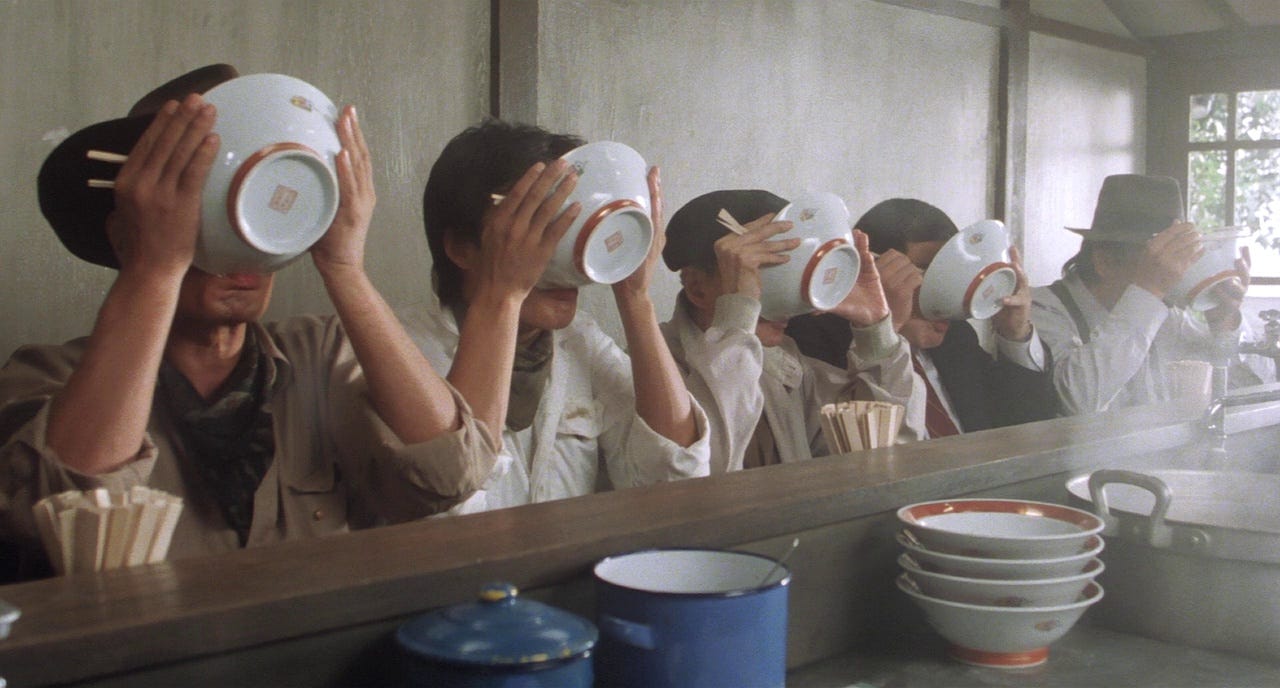
Juzo Itami’s 1985 ramen western, Tampopo, is one of the greatest films to explore this inherent intimacy of food. The central story follows a truck driver named Gorō (Tsutomu Yamazaki) who happens upon a small ramen shop on a stormy night and meets its owner, Tampopo (Nobuko Miyamoto). After sampling Tampopo’s ramen, Gorō offers his services as her teacher to help turn her establishment into a paragon of the “art of noodle soup making”. The film is peppered by a series of short vignettes, each following a different character in their own zany, self-contained story that ties back to food and its inherent closeness.
Food is exploration
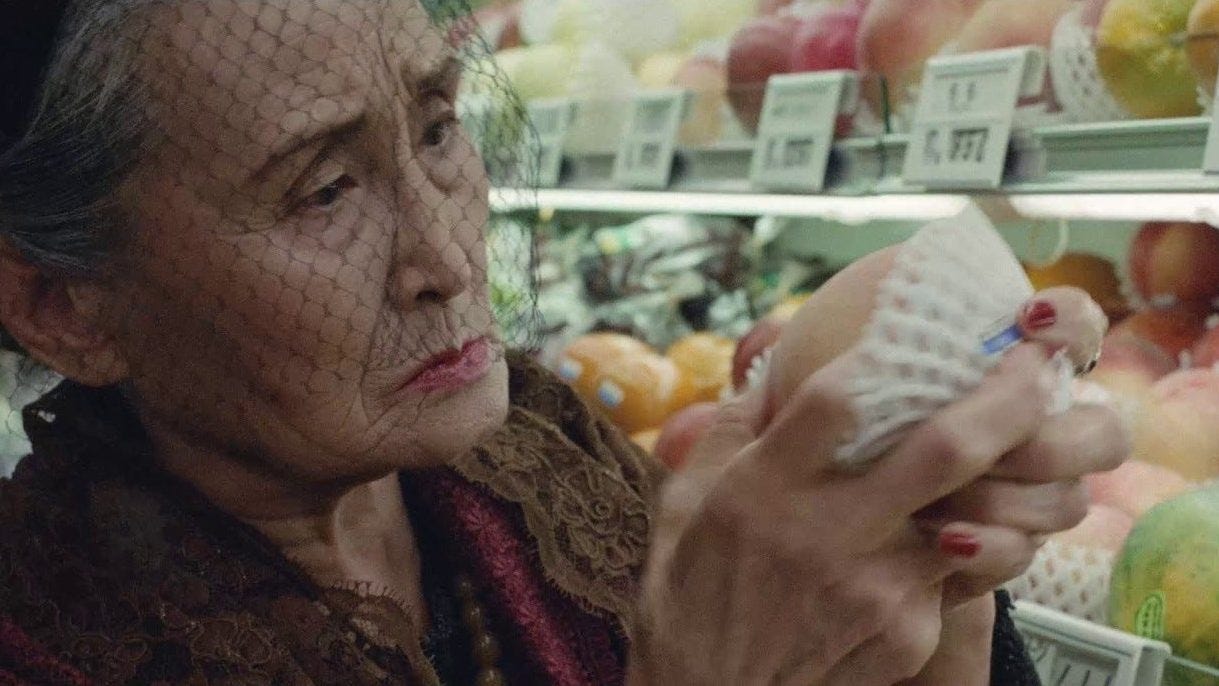
In one vignette, a supermarket clerk catches an elderly woman obsessed with squeezing food. We watch as she powerfully presses her thumbs into the soft cheeks of a peach; with each press, a soft dimple forms in the fruit’s delicate flesh and bounces back once she lifts her thumb. The woman rhythmically presses her thumbs into the peach, again and again, until finally, it succumbs to her touch and oozes its fresh juice down its defined suture.
This vignette cleverly encapsulates the haptic and sensual relationship that food affords. While food is primarily associated with the sense of taste, this scene reveals the unique multisensory experience of food and the intimate experience of it. Food has the ability to entice our eyes, enchant our noses, please our ears, satisfy our touch, and sate our taste buds. Each of our senses is actively engaged in the behaviours around food. With each new meal, we grow ever more curious as to what new sensations it will bring us. The elderly woman’s obsession with squeezing the peach emphasises the intimate, almost primal pleasure derived from engaging with food beyond taste. Through this scene, food isn’t merely a means to survival, but it becomes an act of exploration, satisfaction, and connection. Tampopo encourages us to consider the sensory qualities of food beyond taste; it engages our exploration of them and ignites our desire to be overcome by them.
Food is family
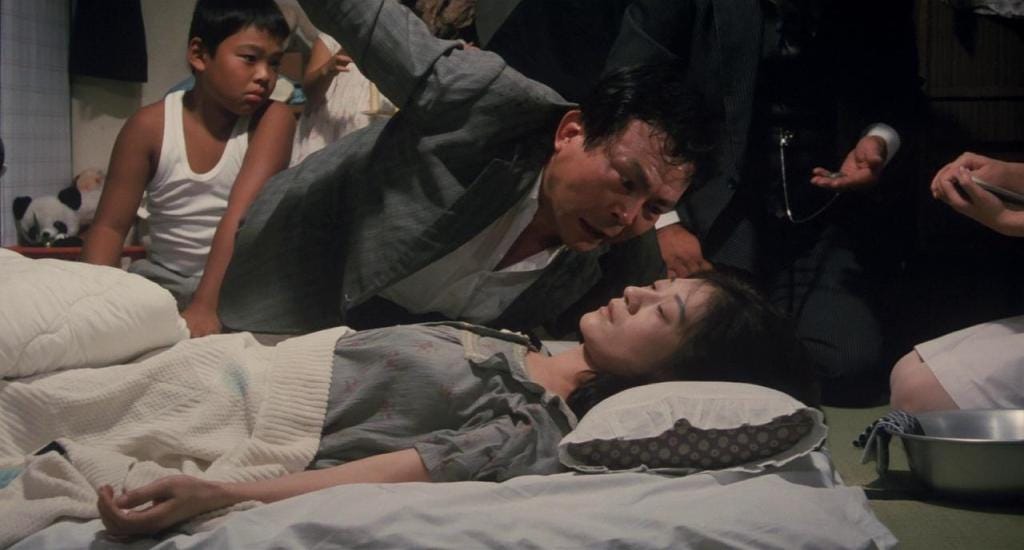
Another vignette follows a man rushing home to his dying wife. He comes home to her on her deathbed, surrounded by her children and the doctor. The man shouts, “Don’t die! We need you!” but his cries are of no avail to his weakened wife until he shouts, “Get up and cook! Go get dinner ready!”. Almost in a trance, the dying woman rises from the bed, hobbles towards the kitchen, and begins cutting up ingredients. Meanwhile, her children set the table and await their meal. She soon brings the wok to the table and dishes out the meal she has prepared into each of their bowls as the children and their father thank her. As she watches them scoff down their meal, a smile grows on the woman’s face, then falls to the floor, and the doctor pronounces her dead. Through their tears, the family continue eating the last meal mum has cooked, still warm.
Humanity’s connection with food forms the simplest yet most intimate of connections in the family home. Food forms the basis of many family rituals: a family dinner every night (no phones at the table!), gathering to handroll gnocchi with nonna before a big party, and having dessert every Sunday night. The cultures and practices of family built around food bring the family into the most intimate settings of the home, the kitchen and dining table. This vignette shows the unique way in which food can be tied to people and culture. As the woman is memorialised through the final meal she has prepared for her family, Itami reveals food’s capability to bring people together, the joys that come from it, and the ways we attribute the simple act of providing for another as an extension of a person. The act of cooking a final meal becomes the dying woman’s way of expressing love and care for her family, even in her final moments. Her drive to fulfil this ritual speaks to the power of food as a language of connection and devotion capable of transcending physical limits. The family’s continuation of the meal after her death, through their tears, highlights the duality of grief and tradition. It’s a moment of mourning but also a moment of honouring her final act through the simple but profound act of eating her lovingly prepared food.
Food is freedom
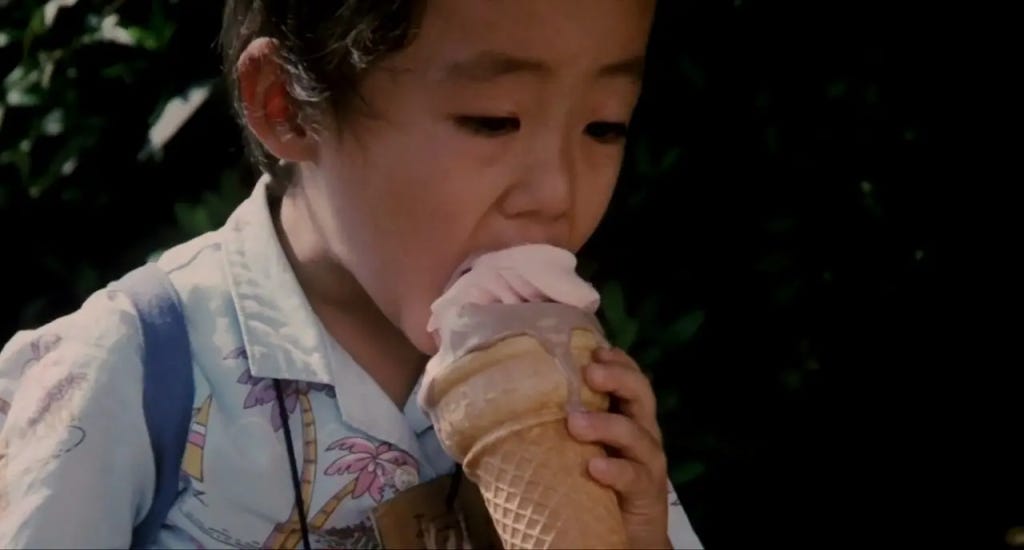
After having his rotten tooth extracted, a man gives in to his sweet craving and enjoys an ice cream on a park bench. A young boy who wears a carrot tied to a string around his neck with a note that says “do not give me any sweet treats” watches on. The man waves the ice cream in front of the boy, and we watch the curious boy’s hands tremble with the thought of whether he should allow himself one lick of the sweet treat. He gives in, takes the ice cream in his hand, and devours it, bringing a smile to the old man’s face.
In this vignette, Itami explores food as a reflection of human desire, joy, and the nuanced relationships we have with it. We witness the enticing qualities of food as a forbidden yet joyous indulgence. When the boy finally gives in and devours the ice cream, it’s a poignant reminder that food has the power to connect people emotionally, evoke happiness, and create shared experiences.
Food is gratification

In the most memorable vignette from Tampopo, we follow a young couple who explore this inherent intimacy of food in the most literal of ways: they incorporate food into their sex life. In one scene, the lovers exchange a raw egg yolk back and forth between their mouths during a passionate kiss. The scene is presented as a continuous shot that builds in intensity; we watch the yolk transfer between the two open mouths back and forth, back and forth, until finally it bursts in the woman’s mouth, and she sighs in ecstasy. With the strong emotional longing tied to food comes an intense feeling of gratification it can provide. It elevates food beyond its mere ability to provide nourishment and instead reveals its hidden pleasures and ability to satisfy on a deeper level. Although we don’t see the couple be intimate in the traditional sense, their interactions with food supplement this intimacy in a unique way. Food and how they engage with it become an extension of the couple and their desires.
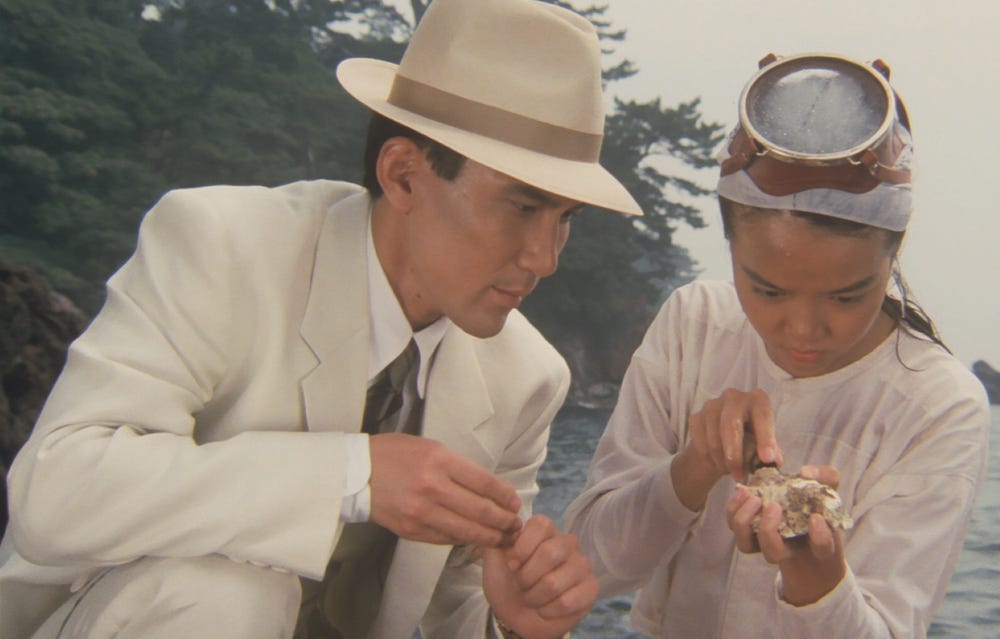
During a separate scene, we watch the same man lounging along the seaside, watching a group of girls catching oysters. Curious about the display, he approaches one of the girls. He picks an oyster out of her net and watches as she cuts through the mollusc’s hardened shell to reveal its soft flesh. He places the shell to his lips, only to be cut by its sharp edges. The girl takes the oyster from him, delicately traces around the membrane with her knife and pours the oyster into her own hand. Cupping the oyster, she presents her hand to the man, and he slurps the oyster from her delicate palm, and she writhes at the ticklishness of it. This scene shows food’s capability as a medium for pleasure and emotion, and the pleasure we get by providing food for another. Food becomes an extension of the self, and it carries a unique pleasure for both the one who has provided the food for the other, as well as for the one who devours it.
Food is people
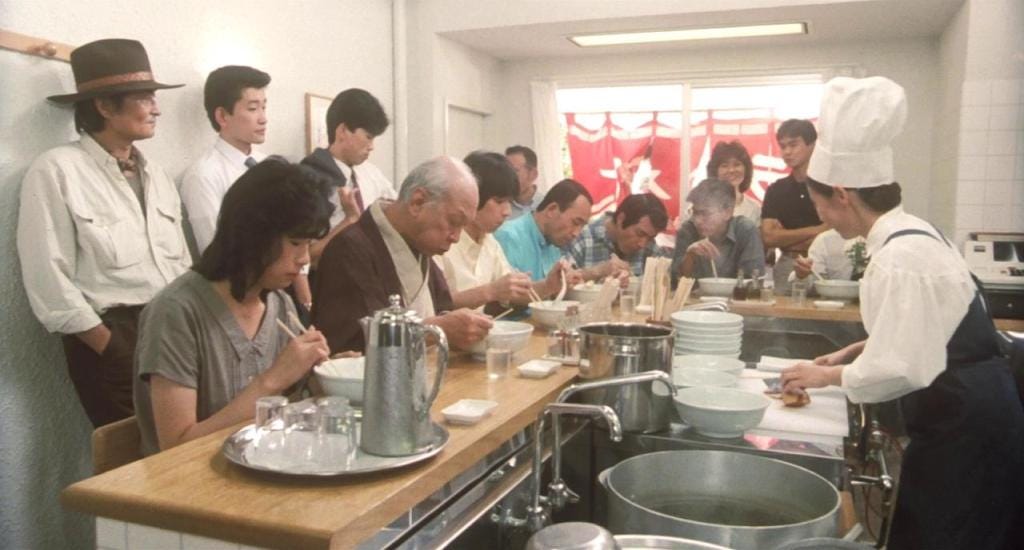
The central storyline of Tampopo sees Gorō aid in Tampopo’s quest to perfect her art of noodle soup making and transform her restaurant. Throughout the film, we watch Tampopo pour her all into her work so that the lines between herself and her art blur. She reaches a point where she is so connected with her soup; it has become the embodiment of herself. As her recipe reaches perfection, she renames her restaurant simply “Tampopo”. Her restaurant becomes synonymous with herself; there is no separation between the art and its artist — she is the food, and the food is her.
Food is life
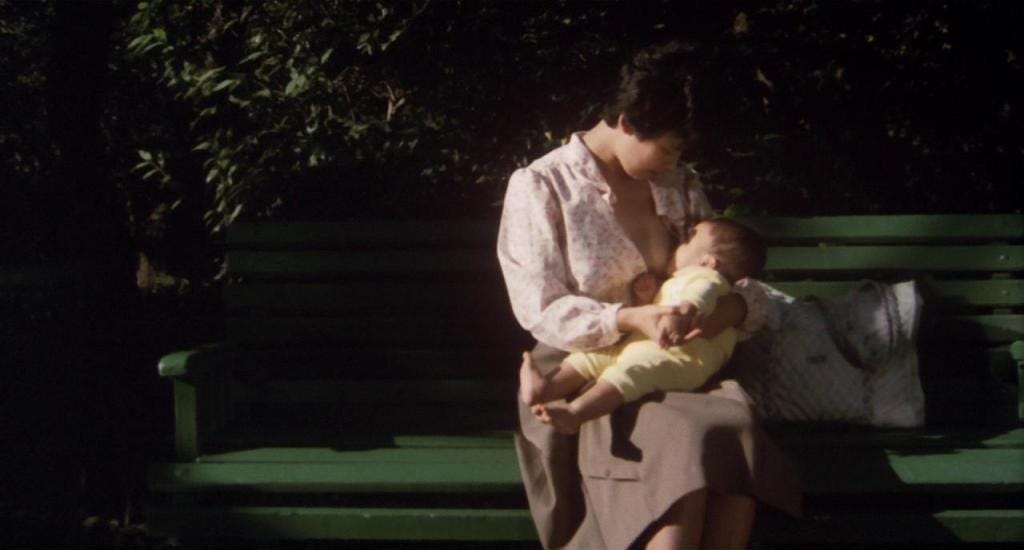
The closing scene of the film emphasises the earliest and most simplistic forms of consumption we grow up with: a woman sitting on a park bench breastfeeding her baby. In these early stages of life, this is food, this is sustenance, this is life. It demonstrates a parent’s unique role in providing and sustaining the life of their child through their own body. A responsibility that does change over time but never disappears completely. Families continue to cook for each other, sustain each other, and bring life to one another. From our very first days of life, we share a curious connection with consumption physically with one another. As the credits of Tampopo roll, this conclusion to the film solidifies that the act of cooking and providing food for another is akin to a mother breastfeeding her baby, sharing the same closeness ingrained in the act, the love, the intimacy.
Connection through consumption
In many ways, our body acts as the threshold between ourselves and the outside world. It serves as a protective outer shell that safeguards our delicate insights from danger. The human body, with its squishy interior, is ingrained with an inherent vulnerability, so when we consider allowing something to enter our body, it requires a heightened level of intimacy and trust. While this notion often evokes the thought of intercourse, Tampopo illustrates that there is a more universal and ordinary form of intimacy that we experience daily. That is, the act of preparing, sharing, experiencing, and indulging in food.